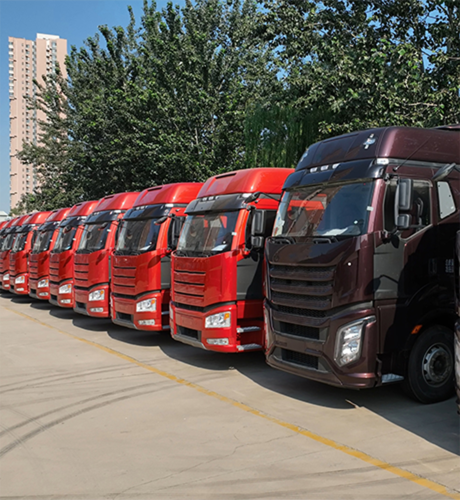
Heavy-duty vehicle manufacturing is currently navigating a complex transition where traditional internal combustion power meets the stringent demands of modern sustainability and operational efficiency. For fleet operators and industrial buyers, understanding the nuances of gm heavy duty truck production involves looking beyond simple assembly and into the integration of chassis durability with specialized application needs.
The shift toward specialized modification in the automotive manufacturing sector has highlighted a critical gap: the need for vehicles that are not just "heavy" but "precision-engineered" for specific workloads. From construction logistics to agricultural support, the production logic has shifted from mass standardization to modular customization, allowing for better adaptation to varied terrains and cargo types.
This analysis explores the technical drivers behind heavy-duty truck production, the critical parameters for evaluating vehicle performance, and how integrated machinery—such as precision seeding systems—complements the broader heavy-duty ecosystem to maximize industrial productivity.


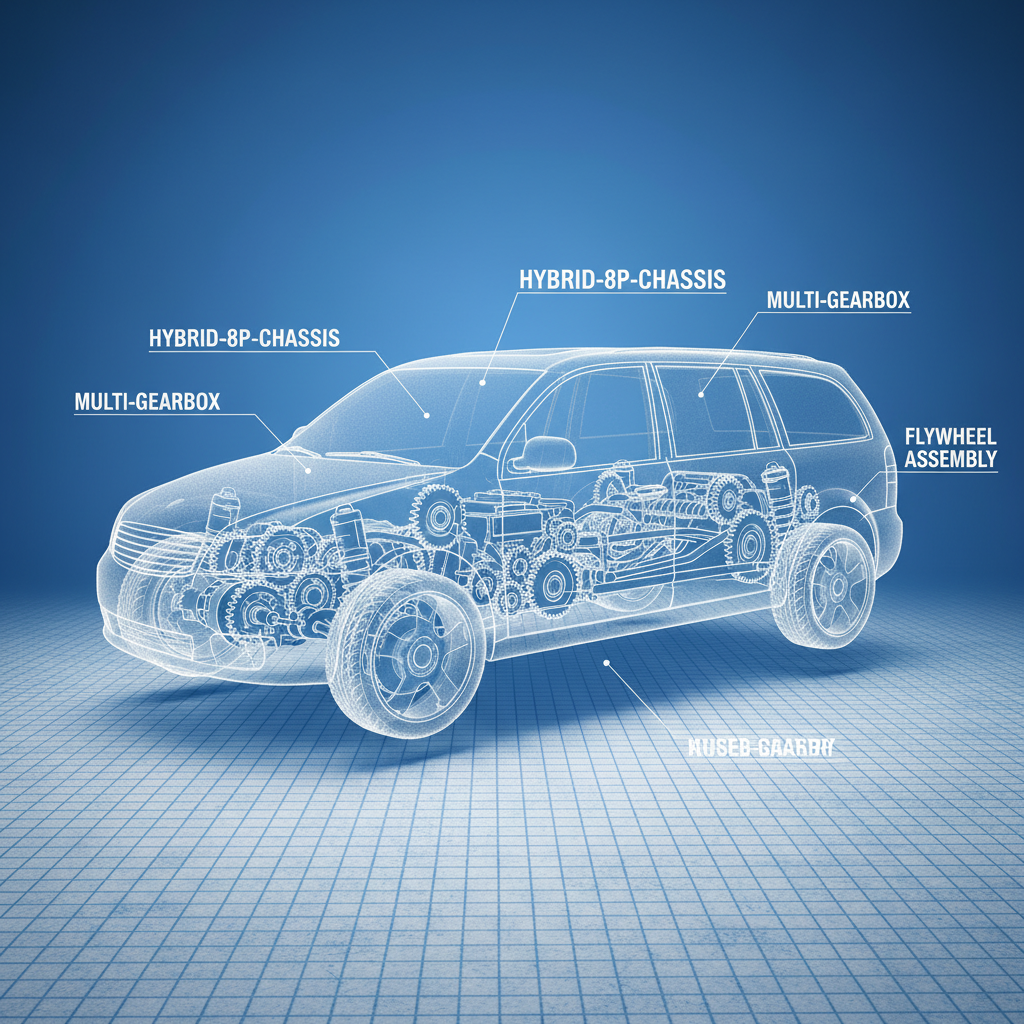
Heavy-duty truck production has transitioned from rigid, single-purpose frames to flexible, modular architectures. Early production focused on raw load-bearing capacity, but modern engineering emphasizes the balance between structural rigidity and weight optimization. This is particularly evident in the automotive manufacturing sector for modified vehicles, where the chassis must support diverse superstructures.
The current context of production involves a synergy between metallurgy and digital design. By utilizing high-strength low-alloy (HSLA) steels and computer-aided engineering, manufacturers can now produce vehicles that resist torsional stress more effectively while reducing the overall curb weight, thereby increasing the effective payload for the end-user.
The core of any heavy-duty vehicle lies in the relationship between its matching power and its load-bearing capacity. In production, this is managed through the precise calibration of engine output and transmission ratios. For instance, vehicles designed for construction or agricultural support require high low-end torque to manage heavy starts on uneven terrain, whereas long-haul cargo trucks prioritize fuel efficiency at sustained highway speeds.
Beyond the engine, the chassis's ability to distribute weight across multiple axles is a critical design factor. Production standards now incorporate advanced suspension systems—ranging from reinforced leaf springs to air suspension—to protect the vehicle's structural integrity and the cargo it carries. The integration of these components determines the vehicle's longevity and its cost-per-mile of operation.
Furthermore, the electrical architecture is becoming as important as the mechanical frame. Modern production includes integrated sensors for load monitoring, tire pressure, and engine diagnostics. These systems allow fleet managers to transition from reactive maintenance to predictive maintenance, significantly reducing downtime and increasing the safety of heavy-duty operations.
Special purpose vehicles represent the intersection of heavy-duty transport and precision machinery. The efficiency of these vehicles is not measured by speed, but by the accuracy of their integrated systems. A prime example is the integration of agricultural machinery with tractor-based transport, where the vehicle serves as a power hub for complex implements.
The true value of a specialized heavy-duty vehicle lies in its ability to synchronize multiple operational tasks—such as simultaneous sowing and fertilizing—into a single pass, thereby reducing fuel consumption and labor hours by up to 50%.
Considering a system like the 2BFY Traction Series, the production focus shifts to synchronization. By integrating dual-channel systems that place seeds and fertilizer with millimeter precision, the machinery transforms the vehicle from a mere transport tool into a high-efficiency production unit. This level of integration is what defines the current state of the modified automotive manufacturing industry.
Evaluating the success of heavy-duty truck production requires a move toward qualitative and quantitative indices. Instead of focusing solely on horsepower, operators now look at working efficiency per hour (hectare/h in agricultural contexts or tons/km in logistics). This shift emphasizes the importance of matching the vehicle's power to the specific requirements of the implement or cargo.
For example, a vehicle with 80-180 Hp matching power may show different efficiency curves depending on the sowing width of the attached machinery. The goal is to achieve the optimal "sweet spot" where the engine operates at peak efficiency without overloading the chassis, ensuring a sustainable lifecycle for the equipment.
In a typical industrial setting, the application of heavy-duty vehicles is often segmented by terrain and cargo volatility. For construction machinery and engineering vehicles, the priority is chassis resilience and the ability to operate on unpaved, high-resistance ground. Production in this segment focuses on reinforced axles and high-torque transmission parts to prevent mechanical failure under extreme loads.
Conversely, agricultural logistics require a different set of priorities: precision and adaptability. A manufacturer evaluating the deployment of a seeder machine must ensure the towing vehicle can maintain a consistent speed and depth (e.g., 40-80mm) across variable soil types. This requires a synergy between the tractor's power delivery and the implement's traction system, ensuring uniform distribution of resources.
The trajectory of commercial vehicle production is moving decisively toward new energy solutions. New Energy Commercial Vehicles are no longer just experimental; they are being integrated into urban logistics and short-haul heavy-duty roles. The challenge for manufacturers is maintaining the load-bearing capacity and range while managing the significant weight of battery arrays.
We are seeing a transition toward hydrogen fuel cell technology for the heaviest categories of trucks, where battery weight becomes a liability. The production of these vehicles requires entirely new chassis layouts to accommodate fuel cells and high-pressure storage tanks, fundamentally changing the "blueprint" of heavy-duty production.
Furthermore, the rise of autonomous driving in mining and large-scale agriculture is reducing the need for traditional operator cabins, allowing engineers to optimize the vehicle's aerodynamics and weight distribution. This shift toward "purpose-built" autonomous platforms represents the next frontier in the automotive manufacturing sector.
Selecting the right heavy-duty vehicle requires a structured evaluation of technical parameters against operational goals. A common mistake is over-specifying power, which leads to increased fuel costs and unnecessary wear on components. The goal should be "right-sizing"—matching the matching power (Hp) to the actual working efficiency required by the task.
Decision-makers should consider the total cost of ownership (TCO), which includes not only the initial purchase price but also the cost of specialized parts and the ease of maintenance. For instance, using a high-strength steel frame may increase the initial cost but significantly reduces long-term depreciation and repair frequency in demanding environments.
The following framework provides a conceptual comparison of selection factors based on different industrial needs, emphasizing the trade-offs between raw power and operational precision.
| Scenario | Primary Factor | Technical Requirement | Relative Suitability |
|---|---|---|---|
| Urban Logistics | Fuel Efficiency | Low Emission/Electric | High (New Energy) |
| Construction | Chassis Rigidity | Reinforced Axles | High (Heavy Duty) |
| Precision Farming | Power Matching | Consistent Torque | High (Tractor-Based) |
| Long-Haul Cargo | Cruise Stability | Aerodynamic Chassis | High (Standard HD) |
| Mining Ops | Durability | Extreme Load Frames | High (Engineering) |
| Special Purpose | System Integration | Modular Interfaces | High (Modified) |
Matching power refers to the synchronization between the engine's horsepower (Hp) and the resistance/load of the implement or cargo. In agricultural production, for example, the 2BFY series requires matching power between 70-180 Hp depending on the model. If the power is too low, the vehicle cannot maintain the required sowing depth; if it is too high, fuel efficiency drops and the risk of chassis stress increases.
Modification can either extend or shorten chassis life depending on the engineering approach. Proper modification involves redistributing the center of gravity and reinforcing stress points. Poorly executed modifications that add excessive weight to a single axle can lead to metal fatigue and structural failure. Using HSLA steel and modular frames helps mitigate these risks.
The choice depends on the duty cycle. New vehicles offer the latest emission standards and integrated diagnostic systems, reducing operational risk. Used vehicles are cost-effective but require a rigorous audit of the chassis's structural integrity and the remaining life of the powertrain. For high-intensity industrial use, the reliability of a new chassis usually outweighs the initial savings of a used unit.
Integrated systems, like the synchronized grain and fertilizer seeder, dramatically increase productivity by eliminating redundant passes across the field. This results in roughly 50% less time spent on planting, reduced soil compaction, and lower fuel consumption. Furthermore, precise placement of nutrients (2-3cm below the seed) optimizes germination rates and crop yields.
Currently, they are most viable in "closed-loop" environments like ports, mines, or urban delivery hubs where charging infrastructure is controlled. For long-haul heavy-duty production, energy density remains a challenge. However, hybrid systems and hydrogen fuel cells are bridging this gap, allowing for the necessary torque and range without the weight penalties of massive battery packs.
Evaluation should be based on the "output per unit of time" rather than top speed. For a seeder, this is hectare per hour (e.g., 3.42-5.4 hectare/h for the 2BFY-36). For a cargo truck, it is the tons-per-kilometer efficiency. Buyers should request data on "effective working time" vs "downtime" to understand the true operational value.
The landscape of gm heavy duty truck production is no longer defined by the size of the engine, but by the precision of the integration. Whether it is the synchronization of nutrients in an agricultural seeder or the transition to new energy powertrains, the objective remains the same: maximizing the operational output while minimizing resource waste.
For industrial operators, the key to success lies in an evidence-based selection process—matching the vehicle's technical specifications to the actual demands of the terrain and the task. As the industry moves toward a more modular and sustainable future, the synergy between high-strength hardware and intelligent software will be the primary driver of profitability and efficiency.