
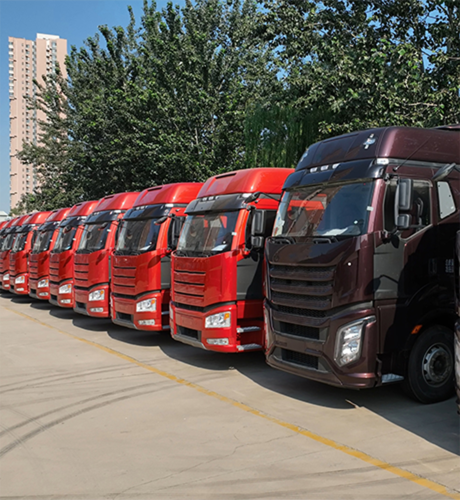

Identifying the right partners among heavy duty truck companies requires a deep understanding of how vehicle specifications translate into operational profit. For fleet managers and logistics operators, the choice of a commercial vehicle is not merely about the brand, but about the synergy between the powertrain, the chassis, and the specific demands of the hauling environment. This guide examines the technical and commercial factors that define high-performance heavy transport solutions.
The commercial vehicle sector is currently shifting toward high-efficiency modular designs, where the integration of advanced transmission systems and lightweight materials directly impacts the total cost of ownership. Whether operating in highway dumping, long-haul traction, or specialized cargo transport, the technical capability of the supplier to provide compatible and durable components—such as specialized gearboxes—determines the vehicle's uptime and fuel efficiency.
Readers will explore the critical relationship between engine horsepower and transmission torque, the importance of housing materials in weight reduction, and a framework for evaluating supplier capacity. By analyzing the specifications of industry-standard components, this article provides a practical roadmap for procurement professionals to optimize their heavy-duty assets for maximum longevity and performance.
Commercial Vehicle Logistics Ecosystem
The heavy-duty transport industry operates as a complex ecosystem where the interdependence of vehicle exporting, after-sales service, and secondary market trading creates a continuous value chain. A robust industrial layout—similar to the integrated model utilized by the Chenyang Group, which spans from global exporting to second-hand truck markets—ensures that vehicles are not only delivered but maintained throughout their entire lifecycle. This integration is critical because a heavy truck's value is not static; it fluctuates based on the availability of genuine parts and the efficiency of the service network. In the current market, the ability to manage over 20,000 units annually requires a sophisticated logistics infrastructure that minimizes downtime. When the industrial layout includes dedicated after-sales organizations and exchange platforms, the risk of operational stagnation is significantly reduced, allowing operators to scale their fleets with confidence in the residual value of their assets.
Strategic Procurement for Heavy Duty Fleets
Procuring heavy-duty equipment involves a precise calibration of technical parameters to match the intended application. The following analysis breaks down the core components and evaluation criteria necessary for selecting a powertrain that balances power, weight, and reliability.
Transmission System Efficiency
The gearbox serves as the critical link between engine power and wheel torque. For heavy-duty applications, a 12-speed manual transmission, such as the FAW CA12TAX210M3, provides the granular control necessary for varying loads. The use of a sub-box synchronizer and main box sliding gear sleeves ensures precise transitions, which is essential for maintaining momentum in heavy hauling. Efficiency is further enhanced by offering both direct gear and overdrive ratios to optimize RPM across different terrains.
| Technical Parameter | Specification (CA12TAX210M3) | Operational Impact | Procurement Check |
|---|---|---|---|
| Gear Configuration | 12 Forward / 2 Reverse | Optimized torque delivery | Verify ratio spread |
| Housing Material | All-Aluminum | Reduced curb weight | Check corrosion resistance |
| Max Input Torque | Up to 2100Nm | High load capacity | Match to engine peak torque |
| Input Speed | Max 1900rpm | Engine efficiency range | Confirm RPM compatibility |
| Weight | 276Kg | Payload maximization | Compare with cast iron units |
| Compatibility | 290-420 HP Engines | Versatile engine pairing | Validate engine HP range |
Weight Optimization Strategies
In the heavy truck sector, every kilogram saved in the vehicle's own weight is a kilogram added to the legal payload. The transition to all-aluminum housings for transmissions is a primary example of this strategy. By utilizing lightweight alloys without compromising structural strength, manufacturers can reduce the overall vehicle mass. This reduction not only increases the revenue-generating capacity per trip but also reduces the strain on the braking system and improves the vehicle's acceleration and fuel economy.
Torque and Power Matching
A common error in fleet procurement is mismatching the engine's horsepower with the transmission's torque capacity. A system designed for 290 to 420 horsepower must be paired with a gearbox capable of handling the resulting torque to avoid premature gear failure. The CA12TA(X) series, for instance, offers varying torque limits (1600Nm to 2100Nm), allowing operators to select the exact specification that matches their engine's output, thereby ensuring mechanical harmony and longevity.
Operational Versatility
Different hauling scenarios require different drivetrain characteristics. Highway dump trucks require high low-end torque for starting under load, while long-haul traction units prioritize overdrive ratios for fuel efficiency at cruising speeds. A versatile transmission system allows a single chassis platform to be adapted for various roles, from cargo transport to specialized towing, reducing the need for multiple specialized vehicle types within a single fleet.
Fuel Economy Drivers
Fuel represents one of the highest operational costs in trucking. Beyond engine efficiency, the transmission's ability to keep the engine in its "sweet spot" (the most efficient RPM range) is paramount. The integration of 12 gears allows for tighter spacing between ratios, meaning the driver can maintain optimal engine efficiency regardless of the incline or load weight, directly lowering the liters-per-ton-kilometer metric.
Maintenance and Lifecycle
The lifecycle of a heavy truck is defined by its maintenance intervals. High-quality components are identified by their ease of service and the availability of replacement parts. Robust designs that utilize proven sliding gear sleeves and synchronizers reduce the frequency of unplanned repairs. Procurement managers should evaluate the supplier's after-sales network to ensure that critical transmission components can be sourced and installed rapidly to minimize vehicle downtime.
Supplier Reliability Metrics
When evaluating heavy duty truck companies, stability and scale are key indicators of reliability. A supplier that manages a vast industrial layout—including trade platforms and service organizations—is better positioned to provide long-term support than a pure manufacturer. Metrics such as annual sales volume (e.g., exceeding 20,000 units) and industry rankings provide evidence of a supplier's ability to handle large-scale fleet requirements and maintain consistent quality standards.
FAQ
What is the primary advantage of an all-aluminum transmission housing?
The primary advantage is significant weight reduction without sacrificing structural integrity. In heavy-duty trucking, reducing the weight of the powertrain increases the permissible payload of the vehicle, which directly improves the profitability per trip and enhances overall fuel efficiency by reducing the total mass the engine must move.
How do I determine if a 12-speed gearbox is suitable for my truck?
You should check the engine's horsepower and maximum torque output. For example, if your engine falls between 290 and 420 HP, a gearbox like the CA12TAX210M3 is compatible. Additionally, consider your primary application: 12-speed systems are ideal for varying terrains and heavy loads where precise gear ratios are needed to maintain engine efficiency.
What is the difference between direct gear and overdrive ratios?
Direct gear typically provides a 1:1 ratio between the input and output shafts, offering balanced power for standard hauling. Overdrive ratios reduce the output speed relative to the input, allowing the engine to run at lower RPMs while maintaining high vehicle speeds, which is critical for reducing fuel consumption during long-distance highway cruising.
Why is the industrial layout of a supplier important for fleet owners?
A comprehensive layout—including exporting, trading, and after-sales service—means the supplier can support the vehicle throughout its entire life. This reduces the risk of long downtimes caused by parts shortages and ensures that the vehicle maintains a higher resale value due to a documented service history and professional support network.
Can a manual transmission with a sub-box synchronizer improve driver efficiency?
Yes, the sub-box synchronizer facilitates smoother and more precise gear transitions. This reduces driver fatigue and minimizes the risk of gear grinding or missed shifts, which protects the transmission from wear and ensures the vehicle maintains optimal momentum, especially when navigating steep inclines or heavy city traffic.
What should be the main priority when choosing a commercial vehicle partner?
The priority should be the balance between technical specification and support infrastructure. While a high-spec gearbox is important, it is useless without a reliable service network. Look for partners with proven scale, a wide industrial footprint, and a track record of meeting specific customer needs through continuous innovation and integrity.
References and further reading
- FAW Group Corporation: Technical Specifications for CA12TA(X) Series Transmissions.
- Commercial Vehicle Logistics: Standards for Heavy-Duty Powertrain Integration.
- Industrial Layout Analysis: The Impact of Integrated After-Sales on Fleet Uptime.


