
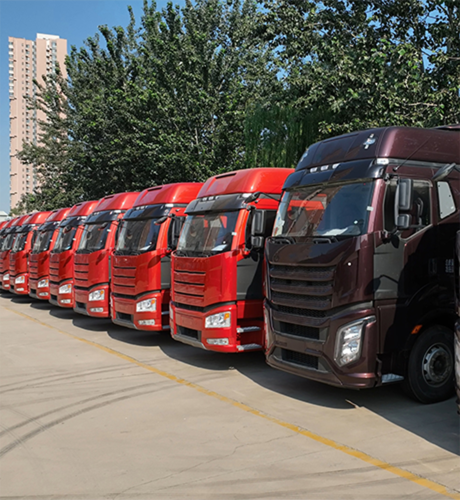

Selecting a reliable partner in the heavy-duty transport sector requires a deep understanding of how specialized engineering translates into operational uptime. For enterprises managing complex logistics, the ability to secure vehicles that balance raw power with structural longevity is a critical business decision. This guide examines the technical requirements of heavy-haul tractor trucks and the criteria used to evaluate a special purpose vehicle company in the global market.
The modern industrial landscape demands more than just a high-horsepower engine; it requires an integrated system where fuel efficiency, emission standards, and modular durability converge. From constructing infrastructure to cross-border freight, the specific application of the vehicle determines its required configuration. We will analyze how specific technical parameters, such as the WP12 engine and reinforced chassis designs, mitigate the risks of premature wear and operational failure in harsh environments.
Readers will gain a technical framework for comparing tractor truck specifications and understanding the commercial implications of fleet maintenance. By focusing on the intersection of precision engineering and total cost of ownership, this analysis provides project managers and procurement officers with the necessary tools to distinguish between standard commercial trucks and high-spec strategic assets designed for relentless heavy-duty missions.
Evaluating Special Purpose Vehicle Manufacturing Standards
The manufacturing of specialized heavy-duty vehicles is governed by the necessity of maintaining stability under maximum payload conditions. Unlike standard logistics trucks, special-purpose tractor units must withstand extreme torsional stress and repetitive high-load cycles. A professional manufacturer integrates high-strength steel frames with corrosion-resistant alloys to ensure that the chassis does not deform under the weight of heavy semi-trailers. The synchronization between the engine's torque output and the transmission's gear ratios is paramount; for instance, a 480HP output must be matched with a robust automated transmission to prevent driveline shock. Furthermore, the integration of Common Rail Direct Injection technology is no longer an option but a standard for achieving the necessary balance between power delivery and strict international emission compliance. These standards ensure that the vehicle remains a productive asset rather than a maintenance liability over its operational lifespan.
Strategic Procurement and Technical Analysis
When moving from general requirements to specific procurement, the focus shifts toward quantifiable performance data and application-specific reliability. The following analysis breaks down the core technical dimensions that determine the effectiveness of a heavy-duty tractor truck in a commercial fleet.
Powertrain Performance Metrics
The core of hauling capability lies in the synergy between rated power and torque. For heavy-duty missions, a 480HP engine delivering approximately 2,500 Nm of torque allows for efficient climbs and stable high-speed cruising. The use of automated transmissions reduces driver fatigue and optimizes fuel consumption by ensuring the engine operates within its most efficient RPM range.
| Technical Parameter | Standard Requirement | Industrial Impact | Buyer Verification |
|---|---|---|---|
| Engine Power | 480HP / WP12 | Payload Capacity | Check Torque Curve |
| Transmission | 12-Speed Auto | Gear Transition Smoothness | Shift Response Time |
| Drive Configuration | 64 | Traction & Stability | Axle Load Rating |
| Fuel System | Common Rail DI | Combustion Efficiency | Fuel Consumption Rate |
| Emission Level | National VI/Euro VI | Regulatory Compliance | Certification Documents |
| Torque Output | ~2,500 Nm | Heavy-Haul Ability | Gradeability Tests |
Structural Integrity and Frame Durability
A heavy-haul vehicle is only as strong as its weakest weld. The use of reinforced high-strength steel frames is essential for preventing chassis fatigue during long-term operation on uneven terrain. Hydraulic dampers and multi-leaf spring suspension systems are critical for absorbing road shocks, which protects both the vehicle's internal components and the cargo from excessive vibration.
Emission Compliance and Energy Management
Sustainability in B2B transport is driven by fuel economy. Adaptive energy management systems can reduce fuel burn by up to 9% by optimizing combustion and reducing aerodynamic drag. For companies operating in regulated zones, adhering to National VI standards ensures that fleets avoid costly penalties and maintain access to urban centers.
Operational Versatility Across Industries
The ability to swap trailer types—from flatbeds for construction materials to refrigerated units for perishables—depends on the robustness of the fifth-wheel coupling. A versatile chassis allows a single tractor unit to serve multiple business functions, maximizing the utilization rate of the asset across different project phases.
Telematics and Proactive Maintenance
Downtime is the most significant hidden cost in logistics. Modern telematics provide real-time diagnostics, allowing fleet managers to identify potential engine or brake failures before they result in a roadside breakdown. This shift from reactive to proactive maintenance extends the service interval and maintains a higher resale value.
Ergonomics and Driver Productivity
Driver retention is a major challenge in the transport industry. An ergonomic day cab featuring air-suspended seats and vibration-reduced cabin design directly impacts driver alertness and safety. When drivers are comfortable, operational errors decrease, and long-haul efficiency increases.
Lifecycle Value and Asset Depreciation
The total cost of ownership (TCO) is determined by the initial purchase price minus the residual value. Vehicles built with modular designs are easier to repair and upgrade, slowing the rate of depreciation. Investing in a unit with a global service network ensures that genuine parts are available, preventing the use of substandard components that compromise safety.
FAQ
What makes a tractor truck suitable for "special purpose" heavy hauling?
A vehicle is suitable for special purpose heavy hauling when it combines a high-torque engine (such as 480HP+), a reinforced high-strength steel chassis, and a 64 drive configuration. These features allow the truck to handle payloads far exceeding standard logistics limits while maintaining structural stability and traction on challenging terrains.
How does the WP12 engine contribute to operational efficiency?
The WP12 engine utilizes Common Rail Direct Injection and advanced turbocharging to maximize thermal efficiency. This results in higher power output with lower fuel consumption. When paired with an adaptive energy management system, it can reduce operational fuel costs by nearly 9%, significantly improving the profit margins for fleet operators.
Why is the 64 drive configuration preferred for heavy-duty tractor trucks?
The 64 configuration provides superior traction and load distribution by utilizing two driven rear axles. This is critical for heavy-haul missions where the weight of the trailer could cause a 42 vehicle to lose grip or suffer axle failure. It ensures stability during acceleration and braking under maximum load.
What should I check when evaluating the durability of a truck chassis?
Buyers should verify the grade of steel used in the frame, the presence of corrosion-resistant coatings, and the design of the suspension system. Specifically, look for reinforced cross-members and high-quality hydraulic dampers that can withstand continuous stress without permanent deformation.
How do telematics systems reduce the total cost of ownership?
Telematics reduce TCO by enabling predictive maintenance. By monitoring engine health and component wear in real-time, companies can schedule repairs during planned downtime, avoiding catastrophic failures that lead to expensive emergency towing and lost revenue from delivery delays.
Are National VI emission standards critical for international exports?
Yes, National VI (or Euro VI) compliance is essential for vehicles exported to regions with strict environmental laws. Non-compliant vehicles may be banned from major cities or face heavy taxes, making compliant trucks a safer long-term investment for global commercial fleets.
References and further reading
- International Standards for Heavy-Duty Vehicle Chassis Engineering (ISO/TS)
- Guide to Heavy-Duty Powertrain Optimization and Torque Management
- Comparative Analysis of Emission Standards in Global Commercial Transport


